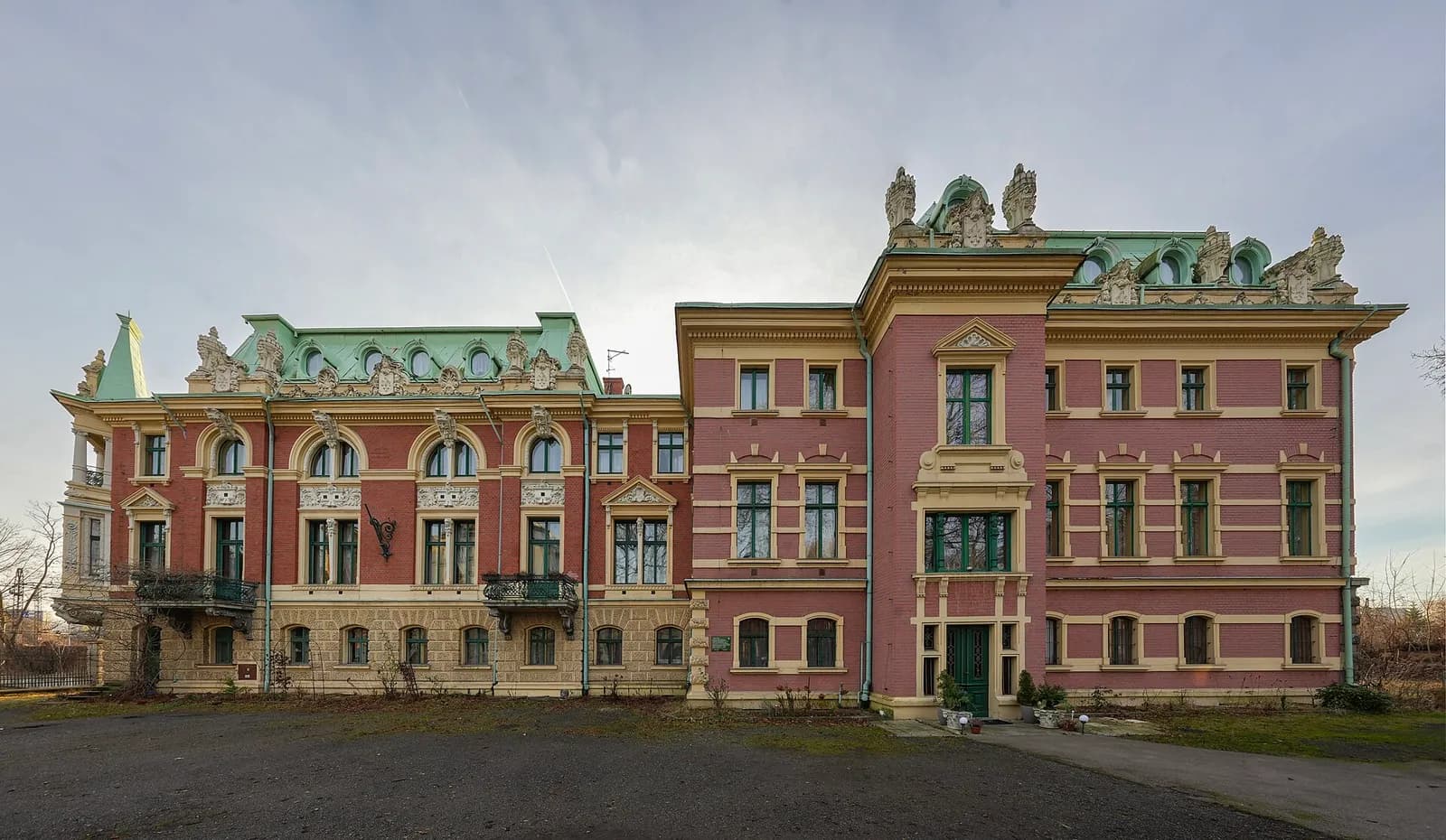
Standing on Żeromskiego Street, surrounded by mature trees and landscaped grounds, Dietel Palace is one of the most remarkable historic buildings in Sosnowiec. Today it is known as a venue for cultural events, weddings and guided tours, however, the palace was originally the private residence of one of the city's most influential industrialists and remains an enduring symbol of Sosnowiec's rapid growth during the Industrial Revolution.
Beautifully restored after decades of neglect, the palace offers a rare opportunity to step inside the world of the textile entrepreneurs whose factories transformed a once small settlement into one of the most important industrial centres in the region.
The Industrial Rise of Sosnowiec
The palace was built for Heinrich, known in Poland as Henryk, Dietel, a Saxon-born textile manufacturer who arrived in the Kingdom of Poland in 1878. His worsted wool spinning mill quickly became one of the area's leading industrial enterprises, fueling the expansion of Sosnowiec during the late nineteenth century.
As his business prospered, Dietel commissioned a residence that reflected both his success and the confidence of an emerging industrial city. Construction began in the early 1880s, with the house expanded several times over the following two decades. By around 1900, the building had evolved into the elegant Neo-Baroque palace that survives today.
The final redesign, attributed to architect Antoni Jabłoński-Jasieńczyk, introduced the distinctive mansard roof and unified the building's appearance while retaining elements of its earlier Neo-Renaissance design.
Designed to Impress
The palace was intended to be both a family home and a statement of prestige. Its richly decorated façade, elaborate plasterwork and carefully balanced proportions reflected the architectural fashions of the period, while the surrounding gardens created a secluded retreat from the busy industrial landscape nearby.
Inside, many of the original interiors have survived or have been carefully restored.
Among the highlights are:
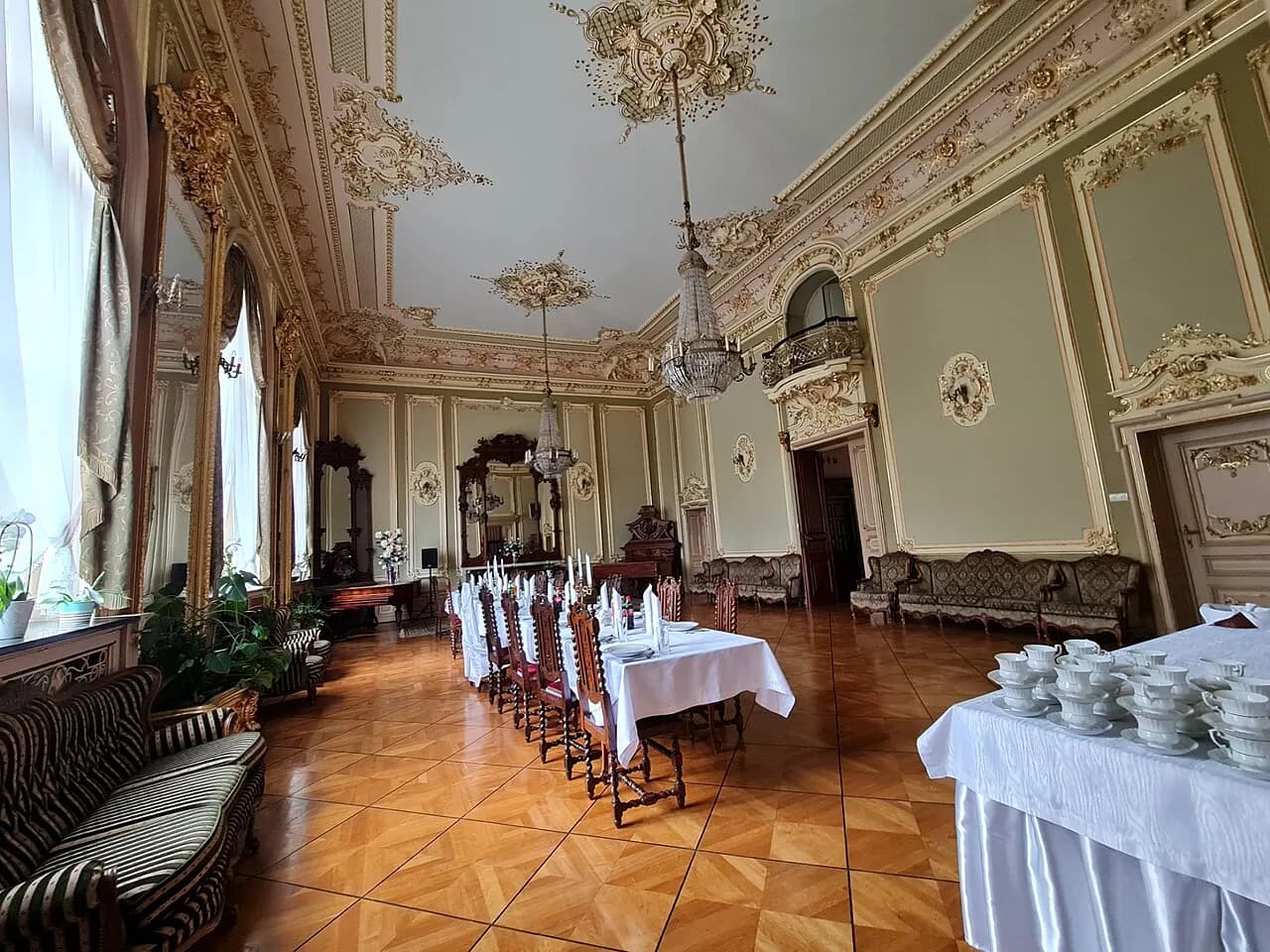
- The magnificent ballroom with its Louis XV-inspired decoration, mirrors and ornate stucco ceilings.
- The oak-panelled dining room, often referred to as the Dutch Room.
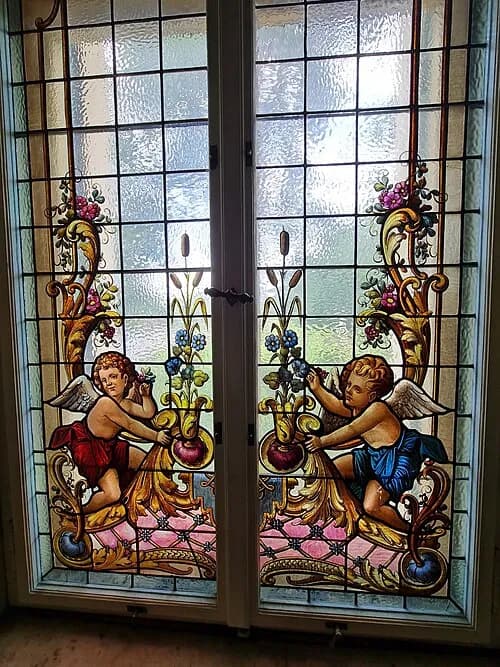
- A Neo-Roman room featuring carved timber panelling, stained glass and intricate decorative details.
- An elegant Art Nouveau cabinet showcasing decorative plasterwork and period craftsmanship.
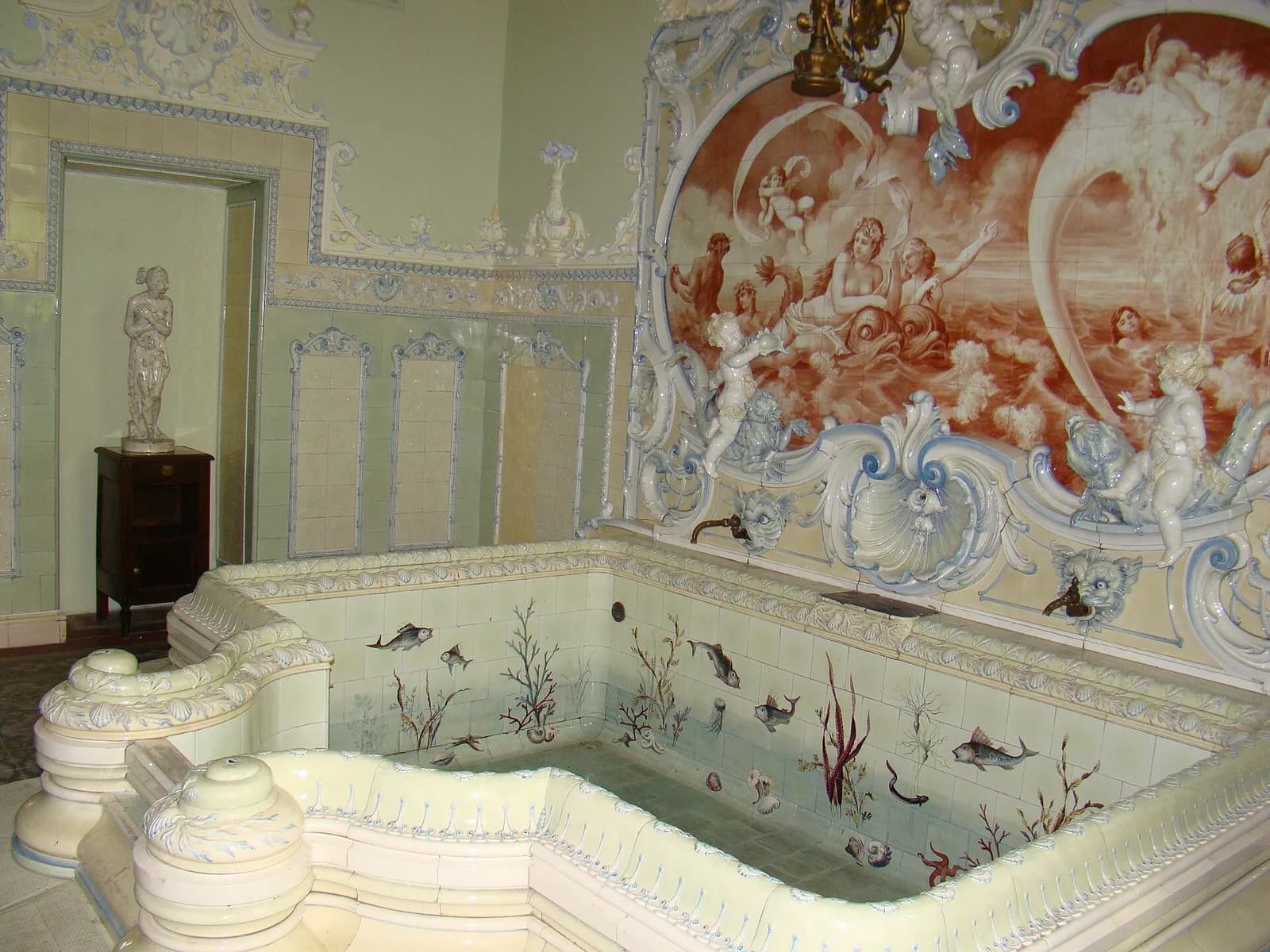
- The palace's exceptionally well-preserved historic bathroom, complete with its monumental built-in bath and decorative ceramic finishes, regarded as one of the building's most distinctive features.
Together, these rooms offer an insight into the lifestyle and tastes of one of Poland's industrial elite at the turn of the twentieth century.
Beyond the Factory Gates
Henryk Dietel's influence extended well beyond his textile mills. Like many industrialists of the era, he invested in the wider community that had grown around his business.
His contributions included workers' housing, educational facilities and support for the local Evangelical church, helping to shape the development of Sosnowiec during a period of rapid urban expansion.
The palace formed the centrepiece of this wider estate, standing as both a family residence and a visible symbol of the city's growing prosperity.
A Turbulent Twentieth Century
The twentieth century brought dramatic changes to both the Dietel family and the palace itself.
Economic difficulties during the interwar years weakened the family's financial position before the outbreak of the Second World War forced them to leave Sosnowiec. The property was subsequently taken over by the state and, in 1945, briefly occupied by Soviet NKVD forces.
In the decades that followed, the palace served a variety of public functions, including as a ballet school and later the Municipal Music School. While these uses ensured the building remained occupied, years of limited maintenance, combined with mining-related ground movement, left much of the structure in poor condition by the end of the twentieth century.
Bringing a Landmark Back to Life
A major turning point came in 1997 when the palace entered private ownership and an extensive restoration programme began.
Over several years, specialists repaired structural damage, restored decorative interiors and carefully conserved many of the original architectural features that had survived more than a century of changing fortunes.
Today, the palace once again reflects much of its former elegance while serving a contemporary role as a venue for guided visits, cultural events, conferences and private celebrations.
An Architectural Treasure of Sosnowiec
Dietel Palace remains one of the finest surviving examples of an industrialist's residence in Poland. Unlike the grand country estates traditionally associated with aristocratic families, it represents the ambition and success of the entrepreneurs who shaped the modern industrial landscape.
Its architecture, beautifully preserved interiors and connection to the story of Sosnowiec's textile industry make it one of the city's most significant historic landmarks. For residents and visitors alike, it offers a fascinating glimpse into the people and industries that helped define Sosnowiec's identity and continues to stand as one of the city's most treasured pieces of heritage.
image credit: Krzysztof Popławski, CC BY 4.0 / Polar123, CC BY-SA 3.0 pl / MichalPL, CC BY-SA 4.0