Sosnowiec has a curious reputation in Poland. Ask where it is and the answer seems straightforward: it is in the Silesian Voivodeship, just east of Katowice.
Ask whether Sosnowiec is actually Silesian, however, and things become considerably more complicated.
For local residents, the distinction is important. Sosnowiec is part of Zagłębie Dąbrowskie, a historic region with its own identity, traditions and history. The city is now firmly embedded in the Silesian Voivodeship and the wider Górnośląsko-Zagłębiowska Metropolia, but it is not historically an Upper Silesian city.
This unusual position, combined with generations of rivalry with neighbouring Silesia, has helped turn Sosnowiec into one of Poland's best-known "meme cities".
Sosnowiec is in Silesia, but not historically of Silesia
The easiest way to understand the distinction is to separate administration from history.
Today, Sosnowiec belongs to the Silesian Voivodeship. It is also one of the largest cities in the Górnośląsko-Zagłębiowska Metropolia. Historically, however, the city belongs to Zagłębie Dąbrowskie, a region traditionally associated with Lesser Poland.
That difference goes back centuries.
While Upper Silesia developed to the west, the territory around present-day Sosnowiec was connected with Lesser Poland and, at various points, came under different political authorities.
The division became particularly striking during the partitions of Poland.
Upper Silesia was incorporated into Prussia and later the German state, while the territory around Sosnowiec found itself under the Russian Empire. The two neighbouring areas consequently developed under different legal systems, languages, institutions and economic conditions.
The border was not simply something drawn on a modern map.
The Brynica really was a border
One of the most important geographical features in the story is the Brynica.
Today, crossing the river between Sosnowiec and neighbouring Upper Silesian towns is hardly an international experience. Historically, however, the river and surrounding area marked significant political and administrative boundaries.
In the 19th century, the area around Sosnowiec was particularly complicated. Nearby borders separated territories controlled by the Russian, German and Austro-Hungarian empires.
The famous Three Emperors' Corner, or Trójkąt Trzech Cesarzy, near today's Sosnowiec, was where the borders of three great European powers met.
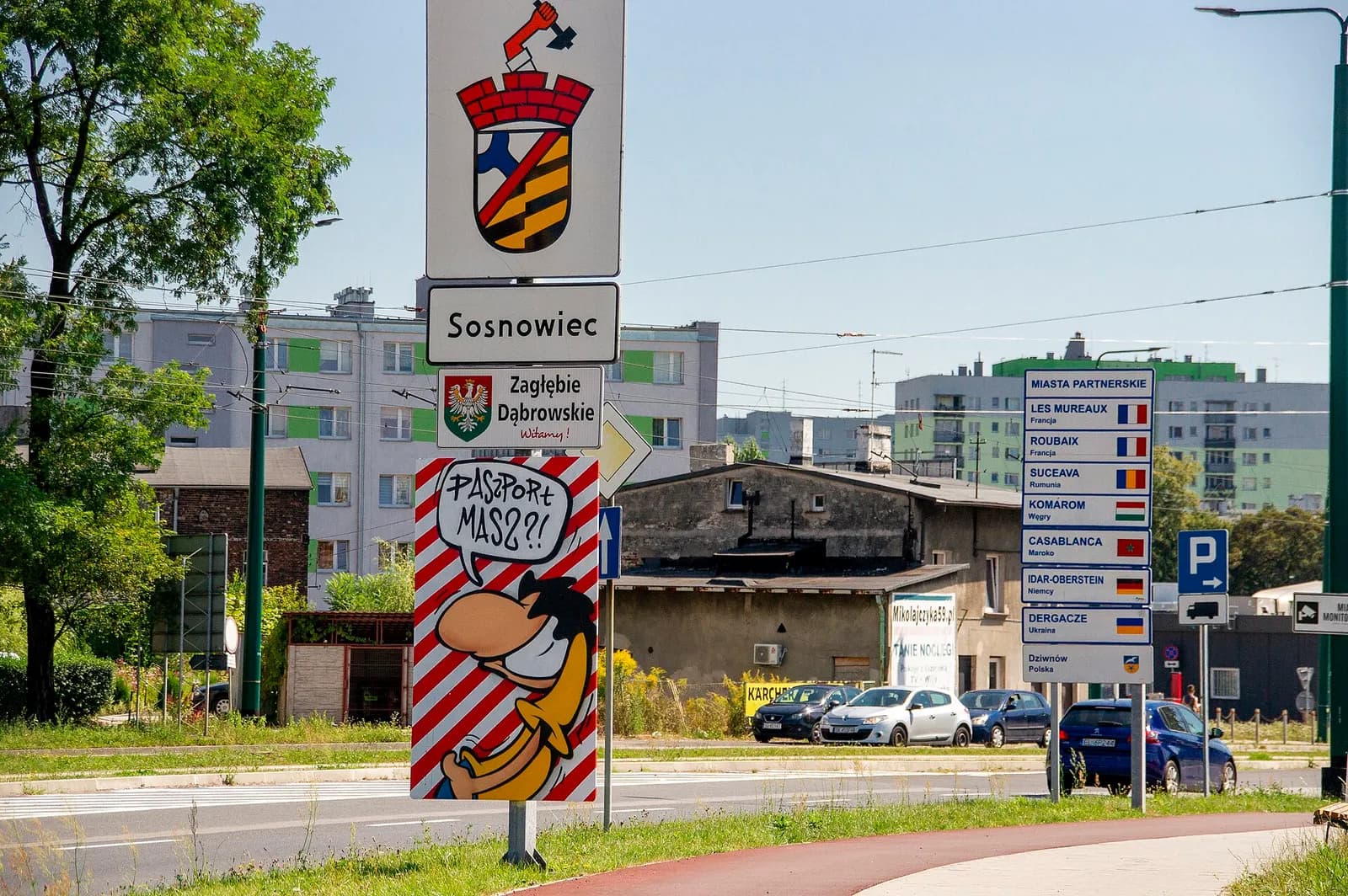
So when someone jokes that you need a passport to enter Sosnowiec, there is a surprisingly solid historical joke hiding underneath it.
A district called "Border"
Perhaps the perfect example is Maczki, today one of Sosnowiec's districts. The settlement was once known as Granica, literally meaning "Border".
Its position became particularly important after the arrival of the Warsaw-Vienna Railway. Maczki developed into an important railway station and frontier settlement, connecting territories belonging to different empires.
For a city now surrounded by one continuous urban area, it is easy to forget just how politically fragmented this part of Europe once was.
The city grew out of the industrial boom
Sosnowiec itself is a relatively young city.
The settlements in the area have medieval origins, but modern Sosnowiec emerged rapidly during the 19th-century industrial boom. Coal, metallurgy, manufacturing and railways transformed the area.
When Sosnowiec received city rights in 1902, it already had around 60,000 inhabitants. That is one of the city's more surprising facts. It did not grow in the traditional Polish pattern of a medieval town slowly expanding around a market square. Its rapid development was driven by industry and transport.
Several existing settlements were brought together to form the new city, including Sosnowiec, Stary Sosnowiec, Pogoń, Sielec, Radocha and Ostra Górka.
So why does everyone joke about Sosnowiec?
The city's meme reputation is rooted largely in the old Śląsk versus Zagłębie rivalry.
Sosnowiec sits directly beside Upper Silesia. The cities are physically close, economically connected and now part of the same metropolitan area.
Yet historically, they developed on opposite sides of an important divide. That makes Sosnowiec an irresistible target for regional teasing.
The classic joke is that Sosnowiec is abroad. Hence the passport. Hence the border crossings. Hence the endless memes suggesting that anyone travelling from Katowice to Sosnowiec should prepare for customs.
The joke has been around far longer than social media. The internet simply gave it an enormous audience.
From regional joke to Polish meme
Once Sosnowiec became a familiar subject online, the jokes expanded.
It acquired a reputation as the place where strange things happen. Unusual news stories became fuel for a growing stereotype, leading some people to jokingly describe the city as the Polish equivalent of "Florida".
The reality is obviously different.
Sosnowiec is a large post-industrial city with ordinary neighbourhoods, schools, businesses, parks, cultural institutions and hundreds of thousands of everyday stories that never become memes.
But once a city acquires a particular internet personality, almost anything can be fitted into it.
A strange headline? Sosnowiec.
An unusual photograph? Sosnowiec.
Something inexplicable? It must have happened in Sosnowiec.
The joke became self-perpetuating.
Sosnowiec joined in
Perhaps the best part of the story is that Sosnowiec did not simply fight its reputation.
It started playing along.
The famous passport joke has been embraced in promotional material, including novelty "passports" referencing the city's supposed status as a foreign country.
The city has also hosted events built around making fun of Sosnowiec itself.
There is something distinctly local about that approach. Rather than insisting that every joke is unfair, Sosnowiec can take the joke, reshape it and make it part of its own identity.
The city behind the meme
The real Sosnowiec is considerably more complicated than the internet version.
It is a city with a fascinating frontier history, a strong Zagłębie identity and deep connections to the industrial development of southern Poland.
It is also a place where historical borders still influence how neighbouring communities see one another.
So, is Sosnowiec Silesian?
Administratively, absolutely. Historically, not in the Upper Silesian sense.
And that apparent contradiction is exactly what makes the city so easy to joke about.
Sosnowiec is a Zagłębie city in the Silesian Voivodeship, sitting within one of Poland's largest metropolitan areas, on ground that once stood beside some of Europe's most important imperial borders.
The passport can stay at home, but the history behind the joke is very real.
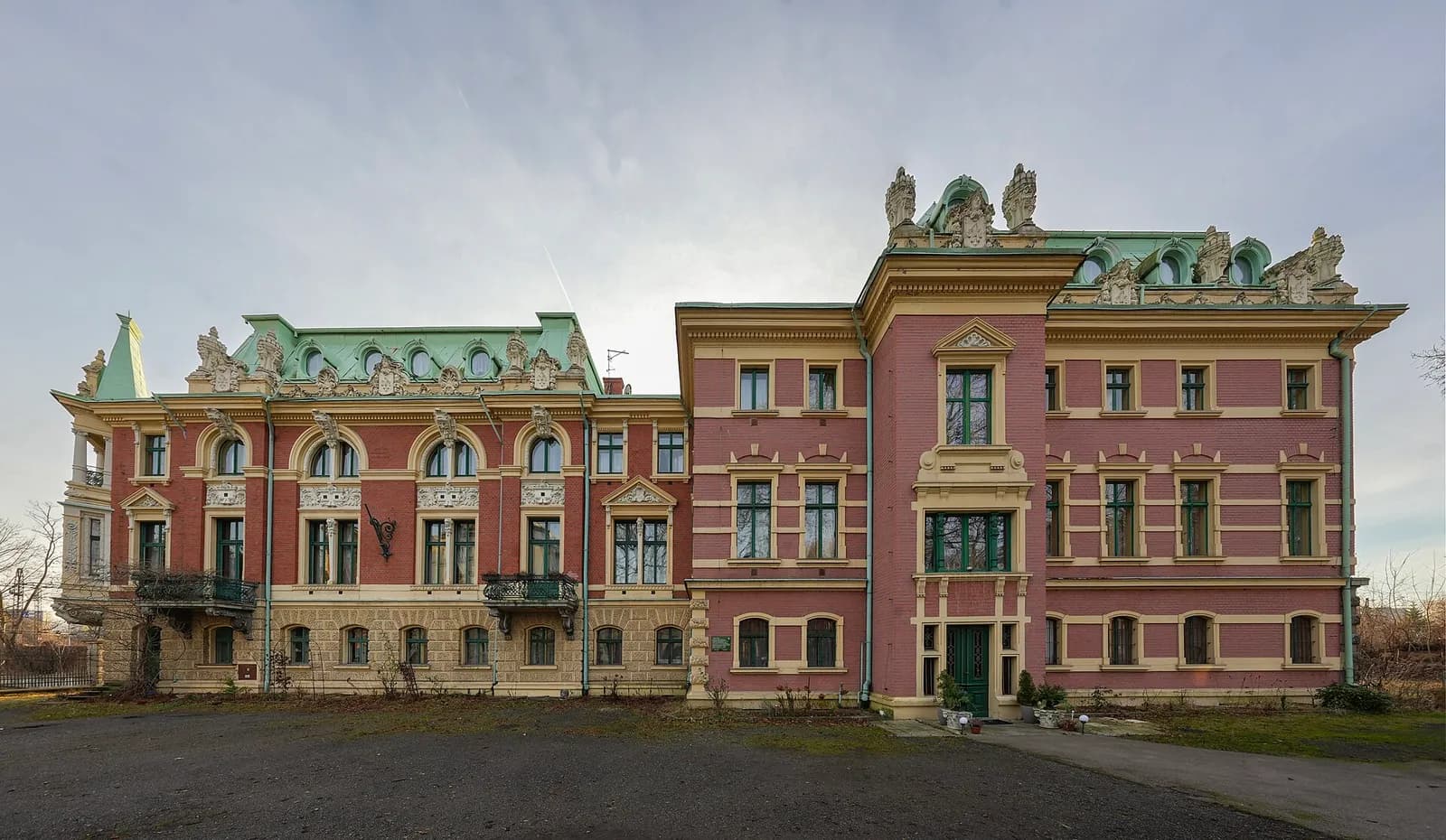
See more: Schoen Palace Museum in Sosnowiec: From Industrial Residence to Cultural Landmark
Image credit: Krzysztof Popławski, Wikimedia Commons, CC BY-SA 4.0,